Insight & mapping
Creating the world’s first Clean Air Hospital Framework.
Building a detailed organisational picture of where change can happen - and using it to create a practical framework for action.
The challenge
When I began this work at Great Ormond Street Hospital, air quality was not a significant part of the organisation's agenda. There was even concern that talking too openly about air pollution might worry parents or affect perceptions of the hospital.
I believed the issue needed a different approach. Children are particularly vulnerable to poor air quality, and the hospital had an opportunity - and maybe even an obligation - to help address an issue directly connected to their health.
The challenge was to make the issue relevant across a complex organisation where many teams did not initially see how their work connected to air quality.

What I did
I mapped the organisation from the inside out, identifying the teams, specialities, activities, relationships. governance and decisions that could influence air quality.
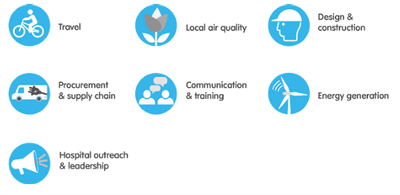
This included transport and logistics, procurement and supply chains, deliveries and the goods yard logistics, engineering and energy generation, construction and development, hospital communications and education as well as clinical, patient, family, community and statutory engagement.
I worked with these teams through interviews, discussions and workshops to understand what they did, where their influence lay and what they believed could change.
The process was deliberately collaborative. Rather than imposing a solution, I helped teams see the connection between their own work, air quality and the health of children and communities - and then worked with them to identify actions ranging from relatively straightforward changes to longer-term, more ambitious opportunities.
These perspectives were brought together into a Clean Air Hospital Framework: a structured picture of where action could happen, how different parts of the organisation connected, and what could be done next. This output was the first of its kind globally.

What changed
The framework became much more than a map.
It helped turn an issue that had previously sat largely outside the organisation's thinking into a practical programme of change, involving teams across the hospital.
It supported changes including:
- integrating air-quality information into electronic patient records and subsequent patient consultations
- electrification of sections of the hospital fleet
- influencing procurement and delivery arrangements
- educating staff, patients and drivers
- developing an air quality monitoring network around the hospital
- building relationships with local authorities and community organisations
- supporting changes to local cycling and pedestrian infrastructure
- creating the Great Ormond Street Play Street programme
- developing wider partnerships around children, health and clean air.
The framework was subsequently used by other NHS organisations and has become part of the evidence supporting wider NHS mandatory estates reporting and action on air quality.